


Most ski racers miss this closing ritual that ties the experience up with a bow
Last night, as I watched the closing ceremonies to the 2026 Winter Olympics in Italy, I got a little sad. The excitement, the drama, the flurry of the past 17 days is over. I kept watching because I knew the show was going to end on a hopeful note, with the figurative “passing of the torch” to France, the host of the next winter Olympics, in 2030.
I know this Closing Ceremonies script only from what I’ve seen on TV, not from any first-hand experience. Alpine skiing athletes (now and back in my day as well) typically do not attend the closing ceremonies at the Olympics. The flipside to competing in a sport that has a robust schedule outside the Olympics is missing that closure ritual that ties up the experience with a bow.
The Closing Ceremonies are the full-circle moment that helps temper the frustration and disappointment felt by the majority of athletes, those who did not win medals or achieve personal bests. They are the run-out to the rollercoaster of Olympic emotions; emotions that span from the anxiety before team selection to the hopeful high of Opening Ceremonies; through the twists of preparation nerves and the crescendo of competition, to the final reckoning of results.
Instead of unwinding with fellow athletes who were on that ride, ski racers are off to the next race, or training venue; or to grab some much-needed rest and recovery before the final push of the season. Many of them get sick, their bodies exhausted from the sustained hype and anxiety in the Olympic arena. Instead of standing amidst fellow Olympians, letting loose and celebrating their accomplishment and basking in a wave of hope as the torch is passed, they are left to process the aftermath of this whirlwind on their own.
BRINGING IT ALL BACK
Back when the Games started, with the spectacular Downhill events, someone asked me if it brought back memories. It did. All of them. The giddy adrenaline of a perfect race day and the fluttery feeling of a course that is running faster than in training; rattling across terrain, flying further with that extra speed and slapping down just a bit harder everywhere; the feeling of knowing you are on the edge, and pushing to go faster but also hanging on for the ride.
What also came back was the sudden, earthshattering stop of a crash. The cries heard all over the mountain from someone who is, in that moment, all alone in shock and terror of what’s happened. The scene back up at the start as the course radios crackle an alarm—and in this case as everyone watches the catastrophe live. Then, the quiet and the waiting. Hearing the chopper come in. Trying to keep your head in the game for an unspecified amount of time before everything starts again and you have to instantly switch back into race mode… putting the crash and the danger and the speed recalibration out of your mind and pushing out of the start anyway, committing to your own movie.
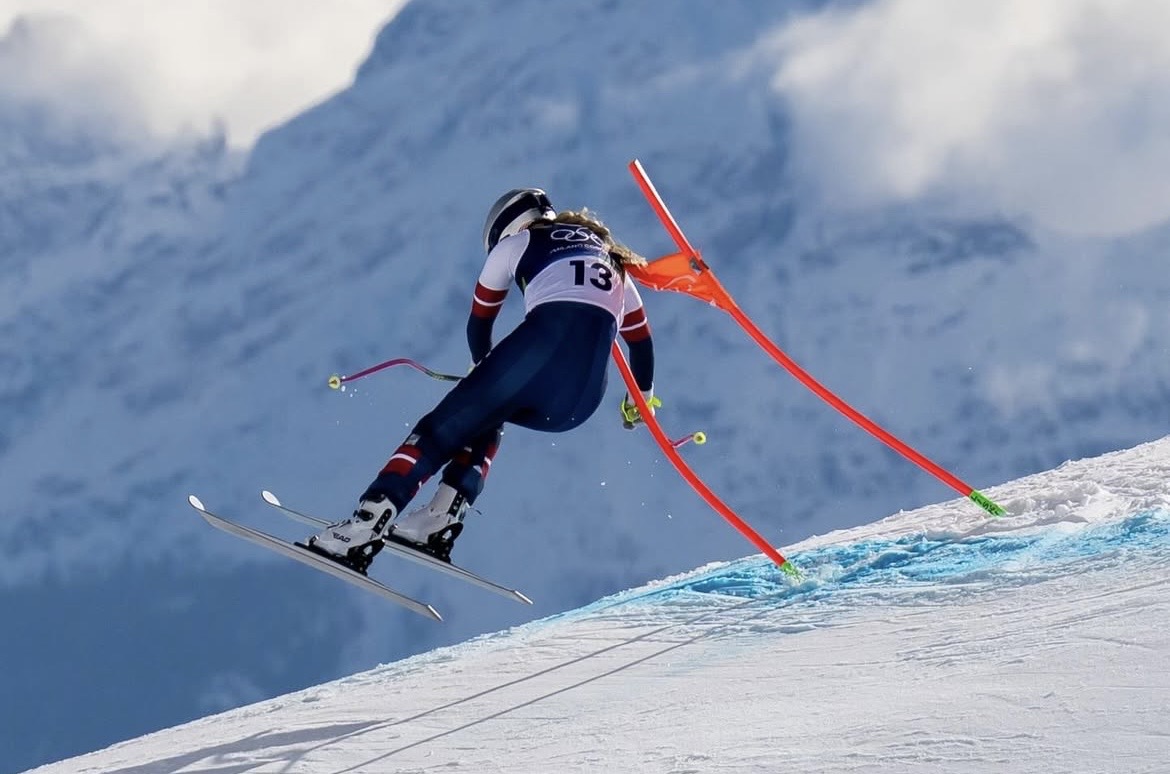
TWO EXTREMES, MOMENTS APART
That now iconic picture of Lindsey Vonn, aloft and askew etched against the breathtaking backdrop of the Dolomites, captures the essence of downhill racing. It is the juxtaposition of beauty and imminent disaster that lies within every run, the dance of aggression and heedless drive that, to perfect, also demands skill, tactics, and the fairy dust of luck and destiny. Within a matter of minutes we saw the two extremes of glory and devastation.
Breezy Johnson laid down a run of sheer power, heart and skill. It set the stage for the most anticipated run of the Olympics, which was over in 13 seconds and one horrifying moment. Those few minutes brought back the mind-boggling range of Olympic emotions and life-changing consequences. Every viewer, whether they knew anything about ski racing or not, witnessed a brutally clear example of what “putting it all out there,” really means. It was, for better or for worse, the most raw and realistic portrayal of our sport.
BEYOND THE MEDALS
So, there was that. There were also, from my perspective on the sidelines and in the press pen, subtler reminders of the Olympic experience that most athletes experience. Once through the finish, there is the momentary thrill of knowing you put it all out there and the heartbreak of seeing anything higher than “3” next to your name. No matter how well you performed, this is the Olympics, and in that finish arena, you fully believe that medals are everything. Perspective, logic and good memories will fill in around that result later, but in that moment there is only one overwhelming reality. You missed it.
It is a small miracle to even step into an Olympic starting gate, healthy, prepared and on your game. That is a victory. Medals reside in a bonus territory beyond. That takes time to internalize. The finish line interviews, however, come right way. Through the crushing disappointment athletes have to answer questions about their own performance, find words for coming up short of that one goal which, however audacious, flickered hopefully inside until now. In a cruel twist of the knife, they are also often asked for insights on the winners and medalists. In that moment, every athlete is trying (some more successfully than others) to process and verbalize something that they likely won’t fully comprehend until long after the Games—the value of the experience.
That will come in time, no matter how hollow it feels when everyone around you is celebrating a success you simply don’t feel. I guess that’s why I like watching the Closing Ceremonies. It’s one chance to see all the athletes truly taking in the joy of the Olympic experience the first time they can—on the other side. Just as for the skiers who missed making the Olympic team, the best medicine for post Olympic recovery is what’s coming up—the rest of the season. I hope the athletes are all as psyched to get back to business as I am to watch them on live timing early weekend mornings!
Perfect..I know you as Edith!